
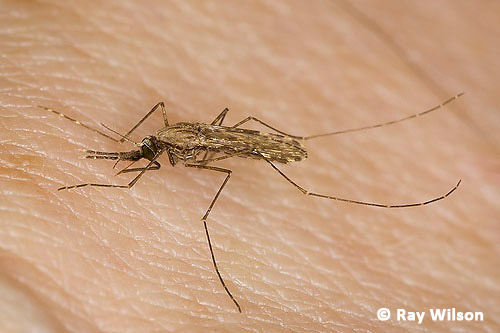
Anopheles gambiae, is the main vector of malaria in Africa and, through the injection of Plasmodium parasites into the host during feeding, is responsible for over 1 million deaths per year, mainly in children under the age of five.
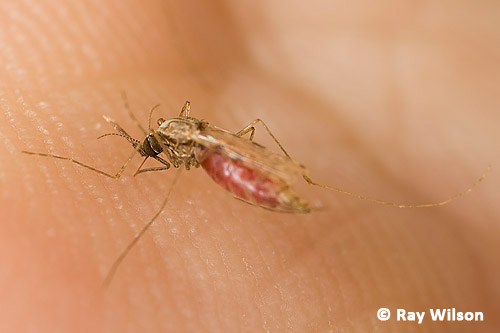
Safe prophylactic drugs are available for malaria, but many are becoming less effective due to the development of resistance by the Plasmodium parasites and new drugs are desparately needed.
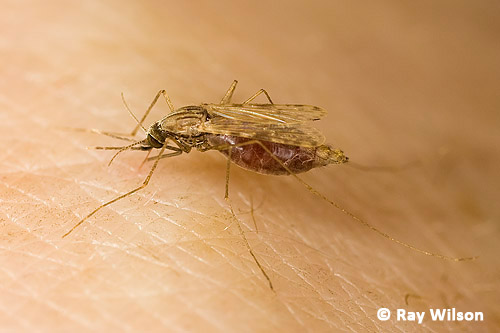
The cycle of transmission of malaria begins when a female mosquito bites an infected host. Once ingested, Plasmodium gametocytes break out of the infected erythrocytes (red blood cells) within the blood meal, and quickly fuse to form a motile ookinete which penetrated the gut wall to form an oocyst on the body cavity side of the gut surface. Around 99% of the invading Plasmodium are killed within the gut by the insect's immune defences before they reach this stage.
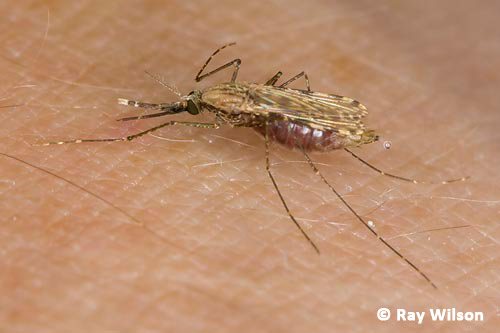
Over the next week or so the ookinete develops and grows, dividing many times to produce huge numbers of sporozoites. Eventually, the oocyst bursts, releasing the sporozoites into the open circulatory system of the mosquito (haemoceol) where they migrate towards and invade the salivary glands. When the mosquito takes its next blood meal, the infective sporozoites are injected into the host along with the mosquito's anticoagulant-containing saliva.
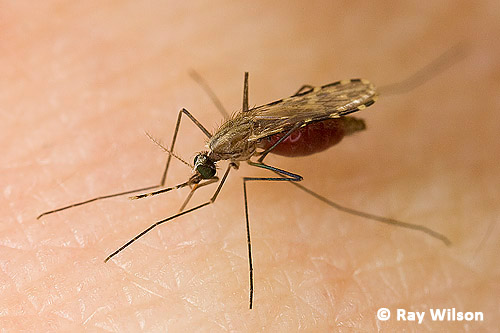
Once inside the host, the sporozoites rapidly invade the red blood cells to gain protection from the host's immune system. Within the red blood cell the parasite undergoes a complex development resulting in the production of more gametocytes ready for transmission to the next mosquito.
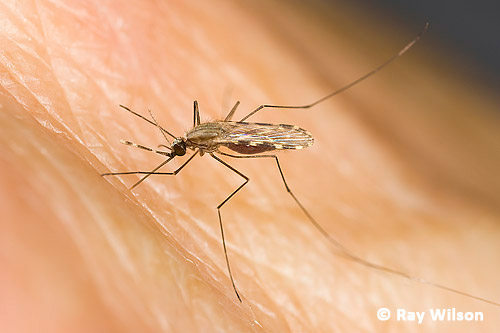
Both A. gambiae and A. funestus are strongly anthropophilic. Through this preference for biting humans rather than animals the risk of transmission of malaria from person to person is greatly increased, making these two species the most efficient malaria vectors in Africa.
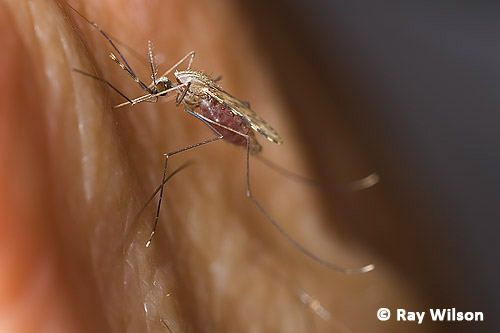
All mosquitoes have aquatic larvae, but one of the main differences in the biology of A. gambiae and A. funestus is in the nature of the type of water in which they lay their eggs. A. funestus appears to have more of a requirement for areas of permanent standing water, whereas A. gambiae is able to tolerate more temporary pools.
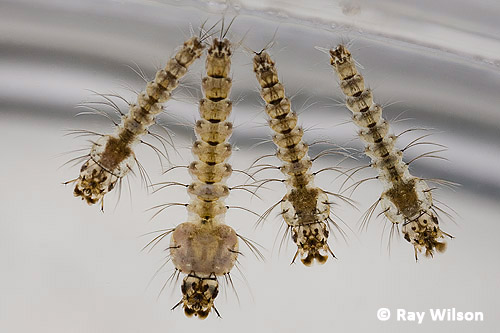
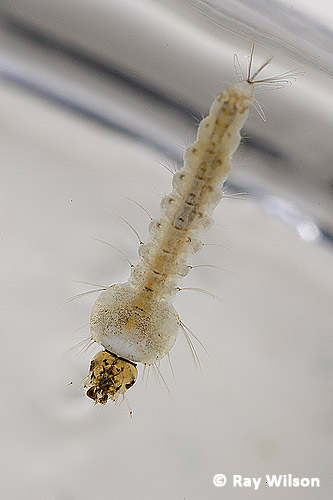 Anopheles gambiae larvae |
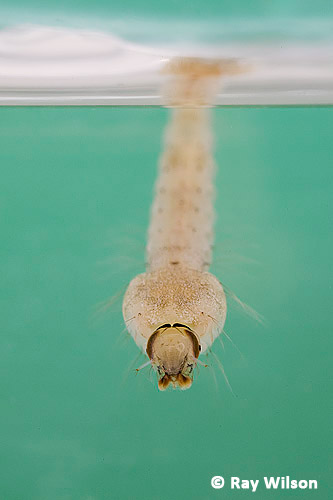 Anopheles gambiae larvae |
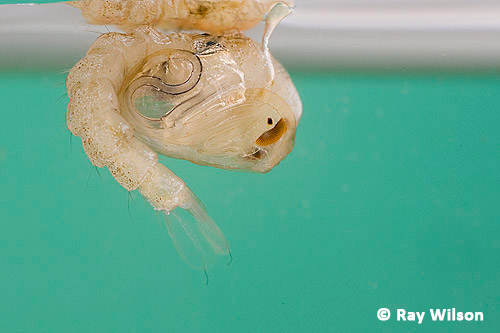
Newly formed pupae are pale in colour, but they rapidly darken to a blackish brown colour. The melanization of established laboratory colonies tends to be a lot slower than it is in the wild, where it is essential to attain an unobtrusive colour as quickly as possible to minimise the risk of predation.
Thanks to John Morgan for allowing the mosquito to sit on, and bite, his arm. All of the mosquitoes in the above photos were from laboratory reared colonies and photographed under controlled conditions.










Ray Wilson owns the copyright of all images on this site.
They may not be used or copied in any form without prior written permission.
raywilsonphotography@googlemail.com